
If you’ve followed me for a while, then you might know that I love trousers, jeans, and pants. There are certain physical sensations associated with wearing pants that just make me feel comfortable and protected. Skirts make me feel vulnerable: there’s either too much skirt volume or too little, the sensation of bare legs feels strange, and I can never figure out how to wear the silhouette. But despite all this, I have been on an eternal quest to find a magical skirt that feels *just right*.
Enter the Henrietta skirt by Spaghetti Western Sewing (SWS). This popular pattern is highly customizable and the hashtag is FULL of creative interpretations and glowing reviews. I decided to give in to the hype and give Henrietta a try.

Design and fabric choice
Henrietta skirt has an elastic waist with gathers along the waistline and at two curved side panels around hip level. There are no pockets, although I’m sure if you search long enough, the internet would come up with a hack.
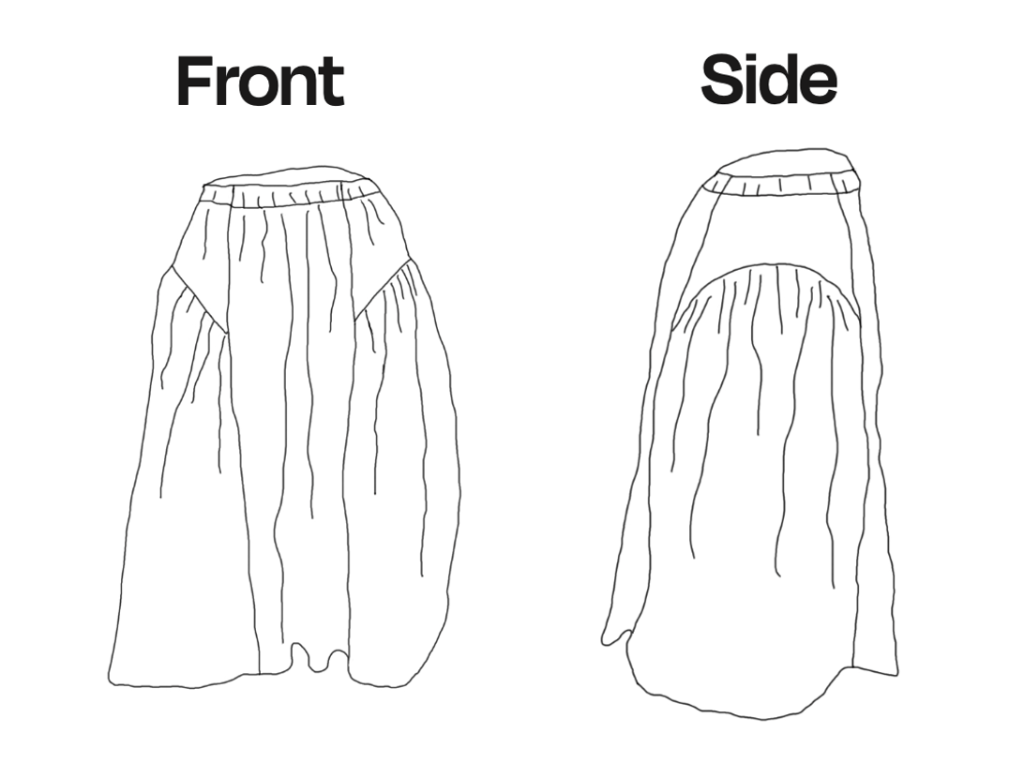
Similar designs have been popping up routinely in high end fashion brands, and trickling down to RTW for years.

One of the things I like about this pattern is that it’s very easy to hack into different silhouettes and looks; you buy one pattern but get an infinite number of variations. For example, I’ve seen a huge variety of interpretations, including:
- Repeating the side panels in front and back for a scalloped tier all around the skirt
- Adding more volume to the gathered panels
- Hacking the skirt into a dress
- Adding trim, ruffles, or other embellishments to highlight curved edge
Fabric choice is also a critical component of the silhouette for Henrietta, and there are a wide range of fabrics that will work beautifully with the pattern. The most popular options seem to be cotton poplin or linen. But there are also quite a few denim Henriettas, as well as sheer silk ones and everything in between.
Fabric choice has a major impact on the silhouette of the skirt. Choose a stiffer, crisper fabric like cotton poplin or silk organza and you will get a fuller, more voluminous skirt that stands away from the body (perhaps in a vague reference to panniers). Choose a high drape fabric like a rayon or a silk crepe de chine, and you get a sleaker, softer silhouette that sits closer to the body.
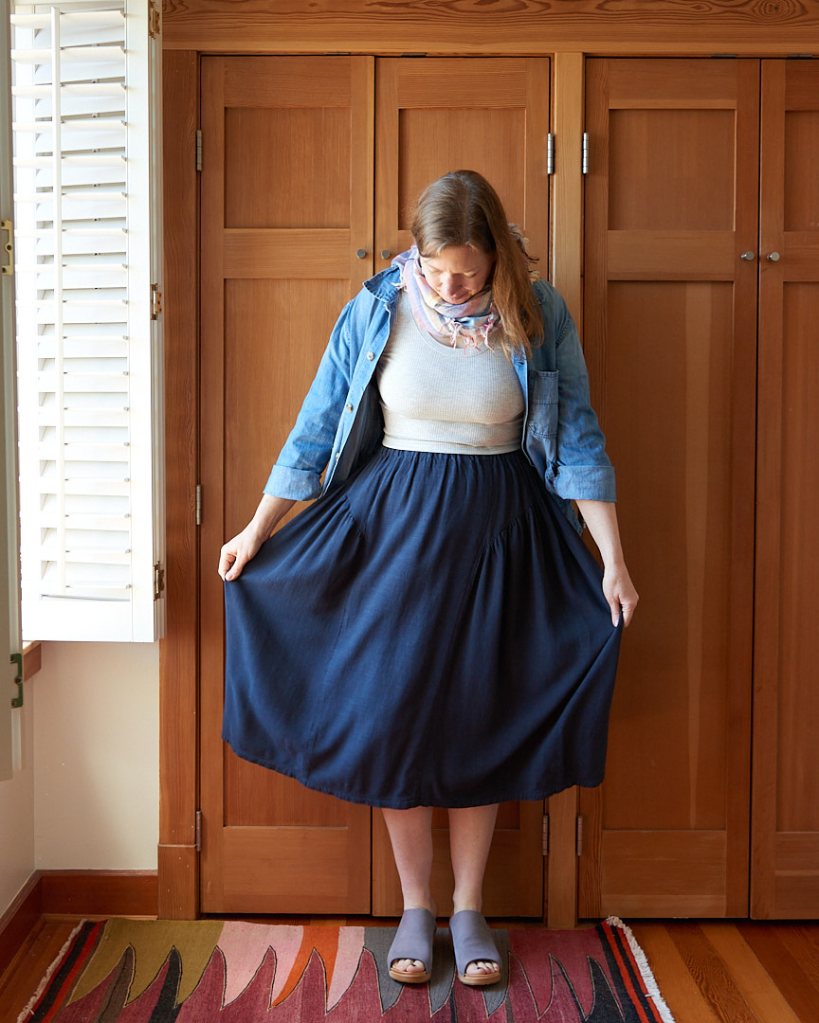
I don’t like the feeling of too much volume in skirts, so I chose a 6.5oz rayon/linen blend for a drapey, soft silhouette. This fabric is very swishy due to the rayon, but it also has some weight and bounce from the linen. Importantly, the hip gathers are softened so the silhouette is more subtle.
Sizing
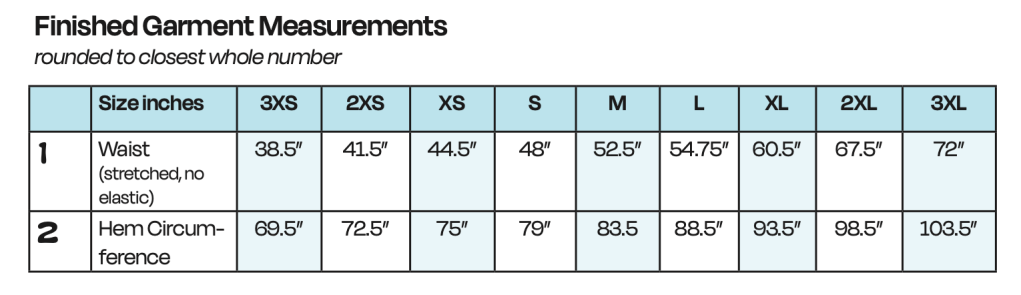
Sizing for a gathered skirt is usually straightforward and only requires a waist measurement. It’s worth noting that SWS uses a different scale for their size charts than most other pattern companies, so it’s important to read through the sizing notes that come with the pattern before cutting. Many sewists will find that their SWS size is different from their usual size. For example, my 43 inch hip circumference usually puts me in a size L or XL in most modern sewing patterns, but in the Henrietta skirt, I’m between a size XS and S. For this version, I chose the size S.

You may also notice that the finished garment measurements chart is missing some of the typical garment measurements, like a waist to hem length. The reason is because the Henrietta skirt is a “demi-pattern,” so you purchase the pattern pieces for the curved gathers at the hip, but then you need to do a bit of math to draft the rest of the skirt panels yourself. You choose what length you want to make the skirt, and this is why this measurement is not included in the size charts.
Construction
While this demi-pattern does take a bit more brain power up front than the typical home sewing pattern, the instructions walk you through the math with a few formulas and charts. With a little concentration, I calculated my skirt pieces and cut accordingly.
The rest of the skirt comes together easily. The sewing skills required to make the skirt are very beginner-friendly: gathering, sewing a straight seam allowance, and assembling a waistband casing for elastic.
The only deviation I made from the straightforward instructions was to change the way the hem is sewn. The instructions direct us to sew a double fold hem, which will work well in most fabrics. But my rayon/linen has some heft due to the linen content, and I found that a double fold became quite bulky, especially around the seams for each panel. I was worried that this heavy hem would affect the lovely drape of the skirt, so instead I used a charmeuse bias binding to make a hem binding.
The hem binding is much lighter weight than a double fold, and the result is a beautifully drapey skirt that’s comfortable and fun to wear.

Final Thoughts
I made this Henrietta skirt after seeing a few rayon and silk versions on Instagram, and I didn’t expect to love it as much as I do. Of all the skirts that I have tried over the years, this is the one that I do actually wear on a regular basis. So, after years of searching, we have a winner! Finally.
The main reason why this skirt was so successful for me was because of the fabric choice. The rayon/linen is soft and drapey, and has enough weight to feel substantial. The high drape of the fabric means that the gathered hip and waist don’t feel like a lot of stiff volume. If I had made this skirt in a cotton or linen, I don’t think it would see nearly as much wear. So this is another great reminder that fabric choice matters; it can make or break any garment.
For my next Henrietta, I’m leaning into the high drape fabrics even more with a silk version. I’m hoping this skirt pattern will be my gateway into more skirts, just in time for summer weather.


 The Crooked Hem
Leave a reply to Lisa Poblenz (patternandbranch) Cancel reply