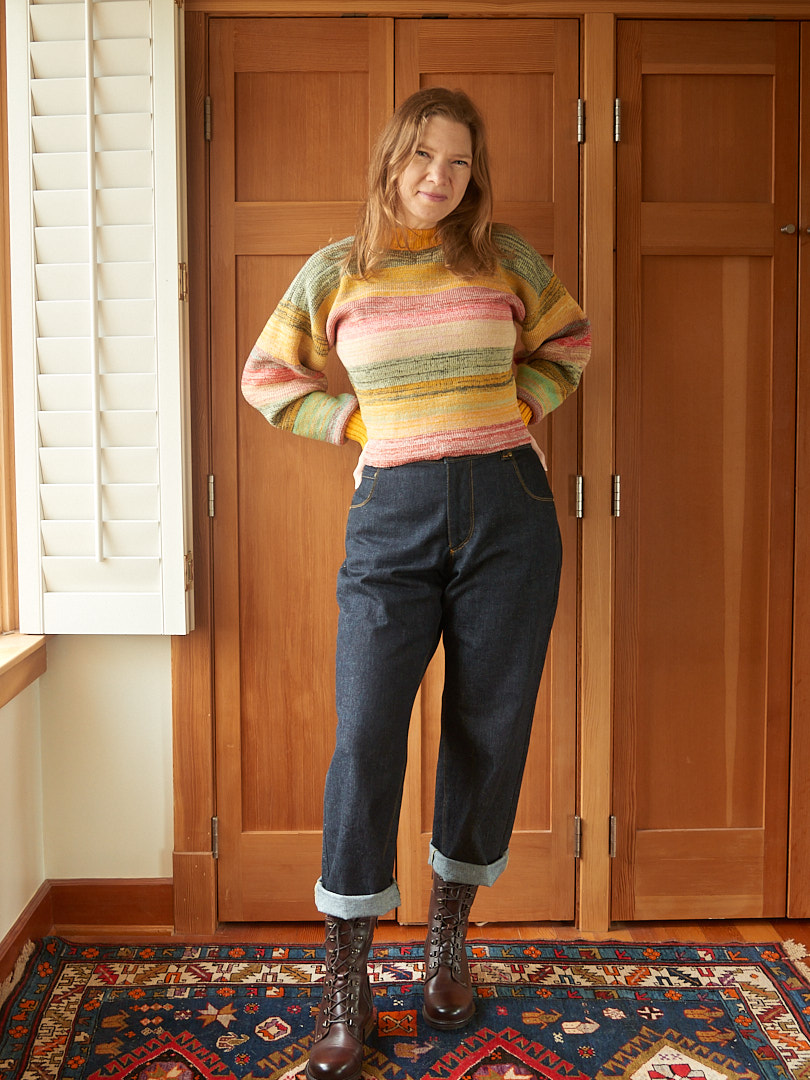
I’ve been thinking about garments as narrative lately. Whether it’s two words or two thousand, every garment makes a statement about the wearer and the maker. The process of making a garment can also be its own form of storytelling, and today’s post will take you along for that journey. I don’t always share the creative inspiration for my projects, or the twists and turns in creative decision-making, but in my closet these are equally as important as construction and fit for a successful garment. So let’s dive in!
Inspiration
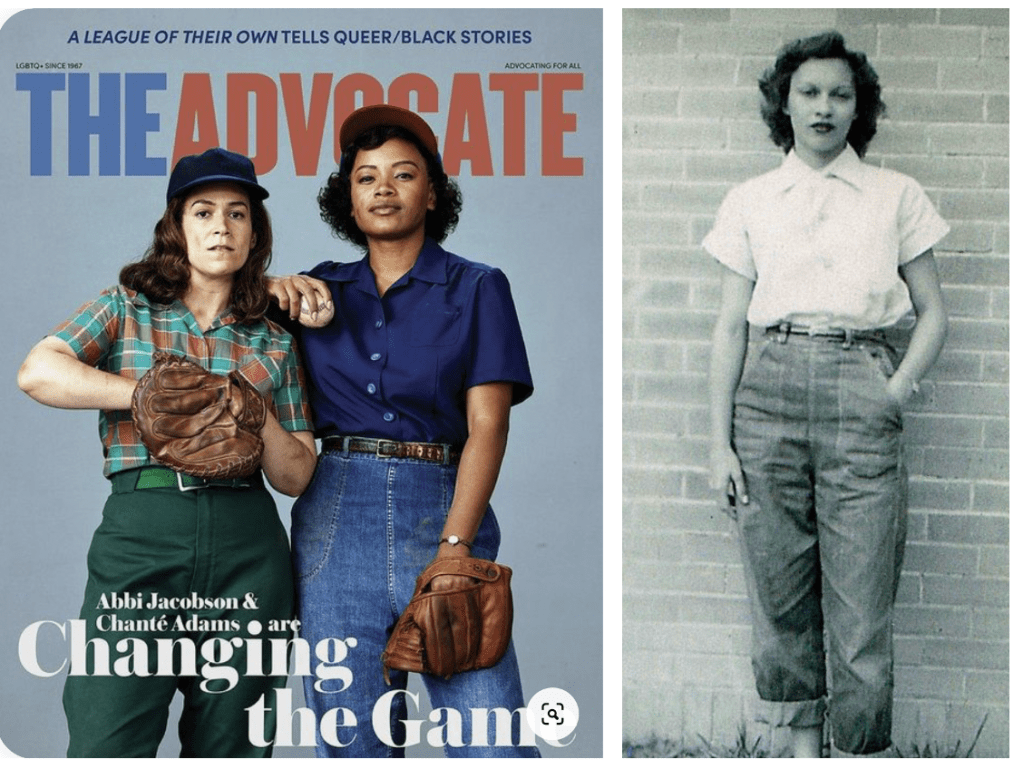
Inspiration for these jeans initially came from watching the 2022 remake of A League of their Own. All of the costumes in this show are stunning, but I was captivated by the jeans that Maxine’s character wears in several scenes at her factory job. Here is Chanté Adams, who plays Maxine, wearing them on a recent cover of The Advocate (left), and a historical photo with what looks like an identical design (right):
I was intrigued by jeans styles of this era, and I looked for more examples of women’s jeans in the 1940s (a full inspiration board is here). All of the designs are very relaxed, often with several inches of vertical ease in the crotch, and plenty of ease in the hip and thigh to allow for movement.
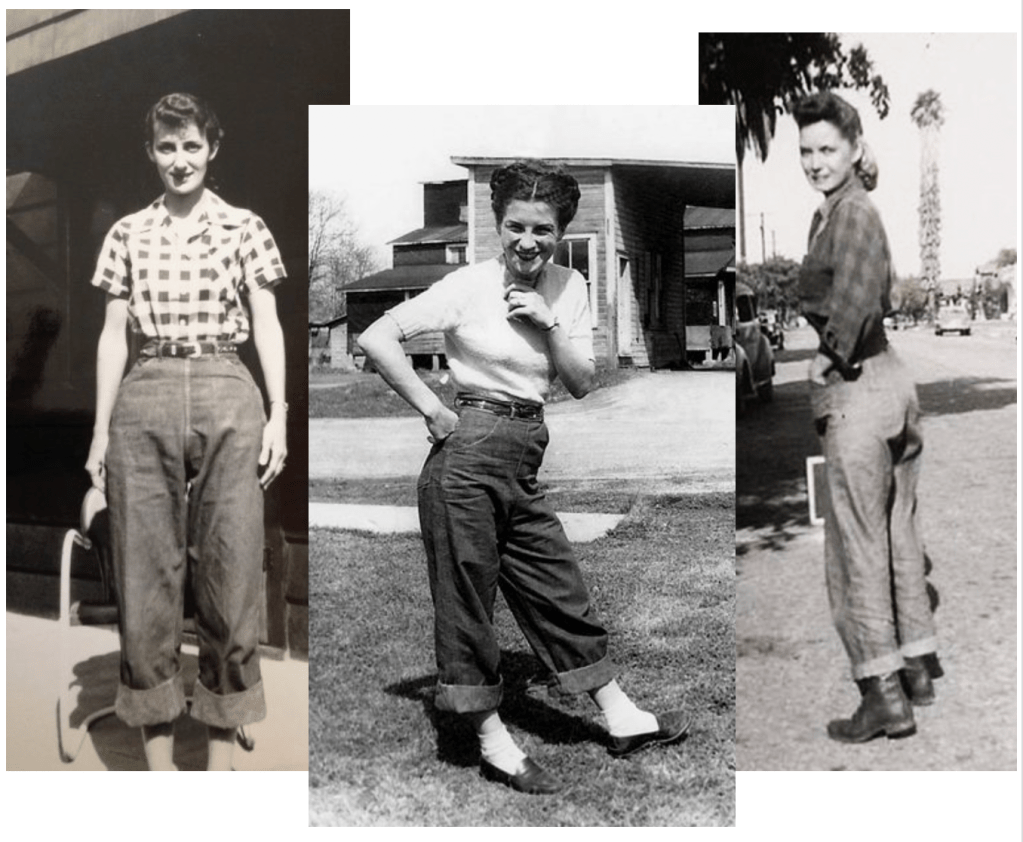
Modern sewists with a discerning eye for fit may be tempted to point out the so-called “drag lines” in these photos, but this was simply the look and style of jeans during this period. So I’d argue that they aren’t drag lines at all, just the wearing ease intended to be there.
The fit of these jeans looks very different from the body-hugging designs we love today, but it makes sense given the origin of jeans and denim. Until the late 1940s, denim was primarily for laborers and was not considered a fashion item. Jeans were designed to be hard-wearing and allow for a full range of movement, as seen below:
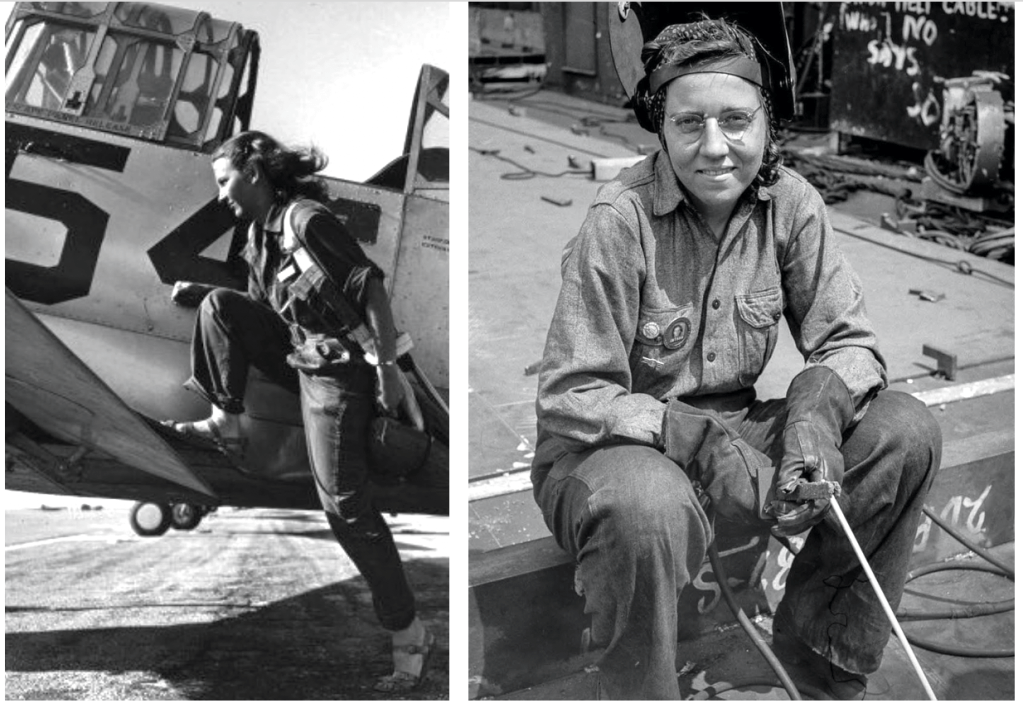
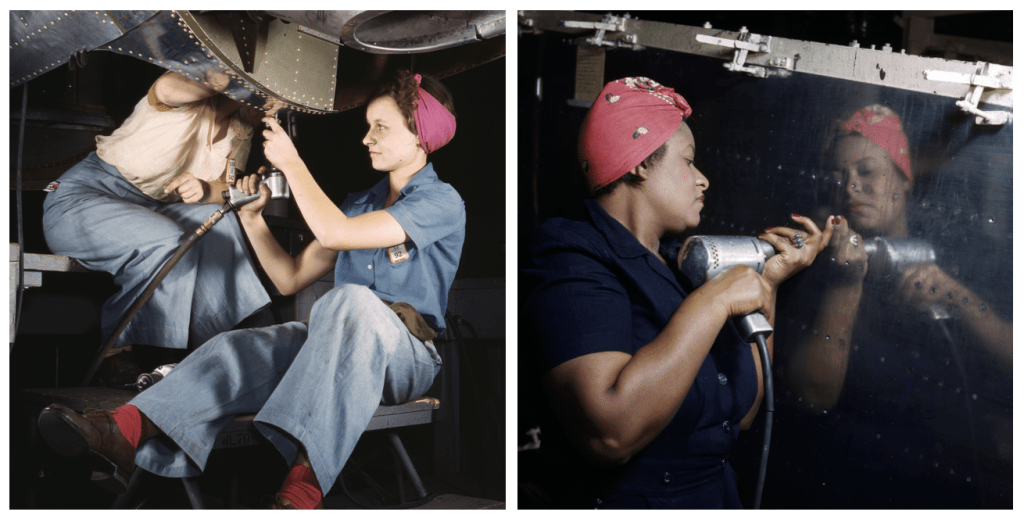
American followers will be familiar with the WWII poster on the right depicting “Rosie the Riveter”, who encouraged women to take jobs in factories, mills, ship yards, and air fields while men were overseas. (Rosie later became a symbol for the women’s civil rights movement). It’s notable that Rosie, and all of the real-life women who joined her, were largely wearing denim and jeans as their workwear uniforms. It was during this time that jeans began to take hold in the American fashion mainstream.

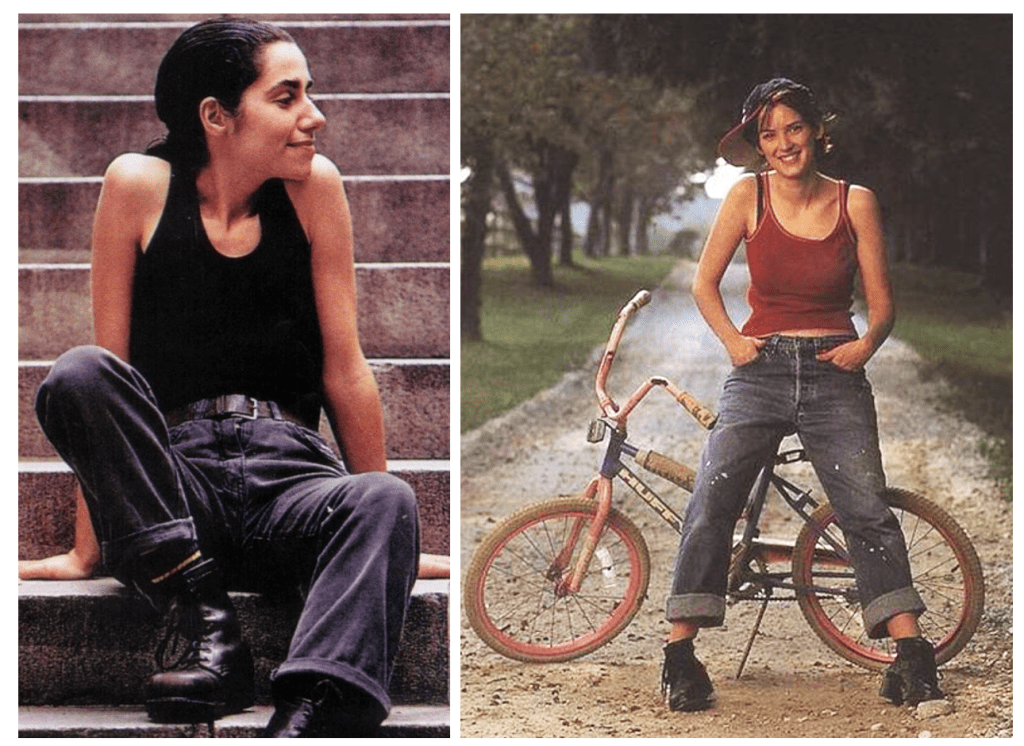
Moving forward in jeans history, this relaxed style also reminded me of the carpenter jeans that I loved in the 1990s and that are trending again now. Once again, these designs borrow from traditional men’s workwear and are very relaxed through the hip and leg. A vintage tee paired with carpenter jeans was my daily uniform in high school and became part of my teenage identity.
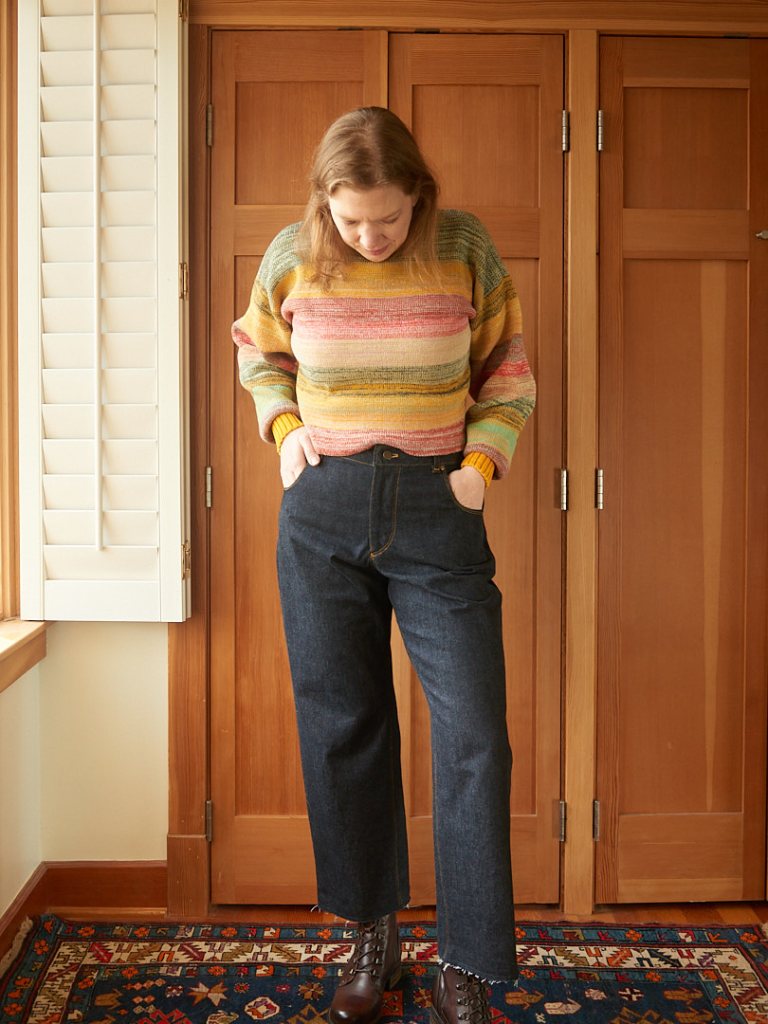
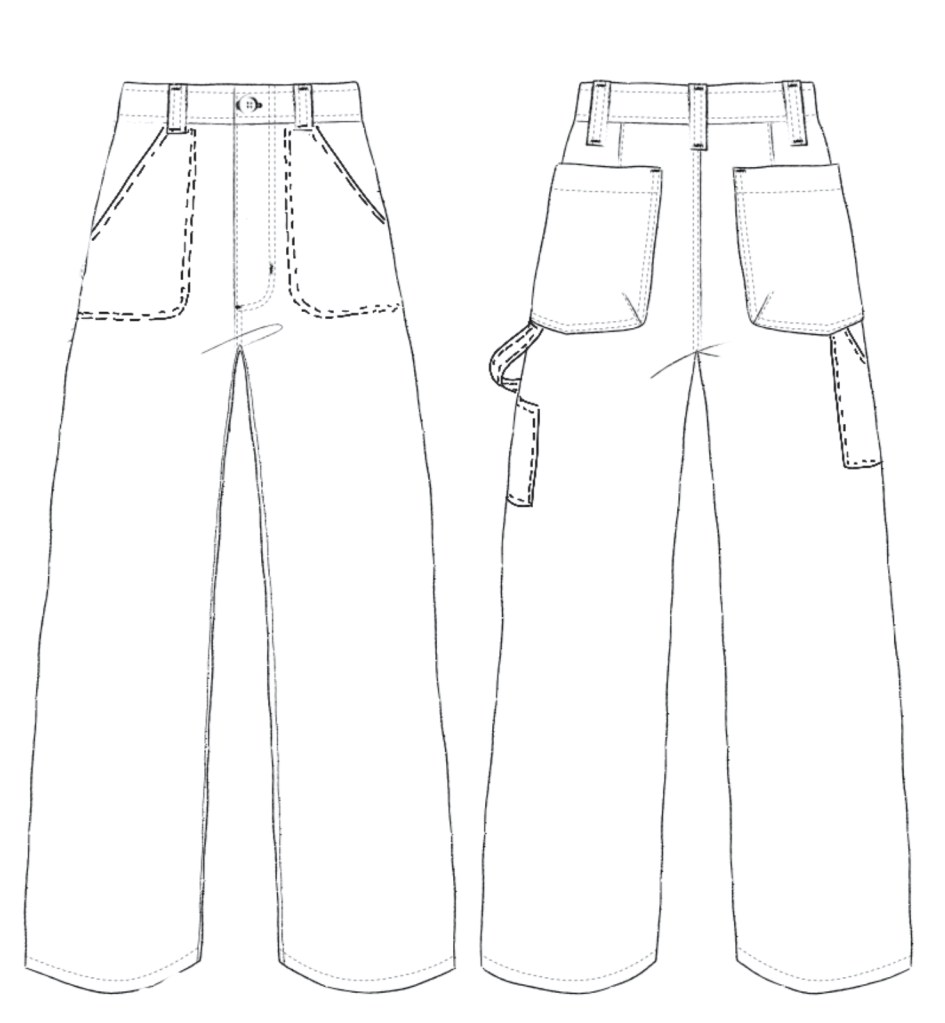
I wanted to make a pair of jeans that wrapped all of these historical and personal references up in one garment. Naturally, the Adams pants by Daughter Judy Patterns was the obvious choice for a pattern, as it is designed to be a carpenter pant with a similar fit to the images above.
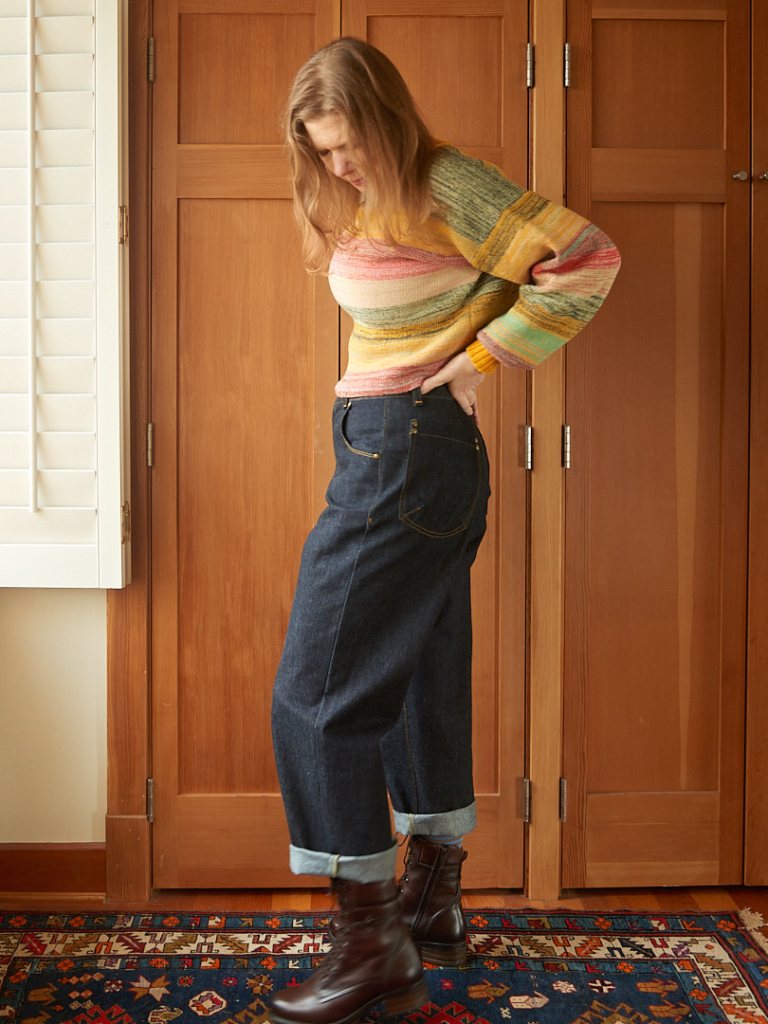
I also wanted to include a reference to the designs of the 1940s and women’s role in the workforce then. I played around with altering some of the design elements on the Adams pants, changing the front pocket shape to resemble Maxine’s jeans above, or adding a carpenter loop to the back as some others have done on Instagram. But these didn’t seem like a strong enough visual reference for me.
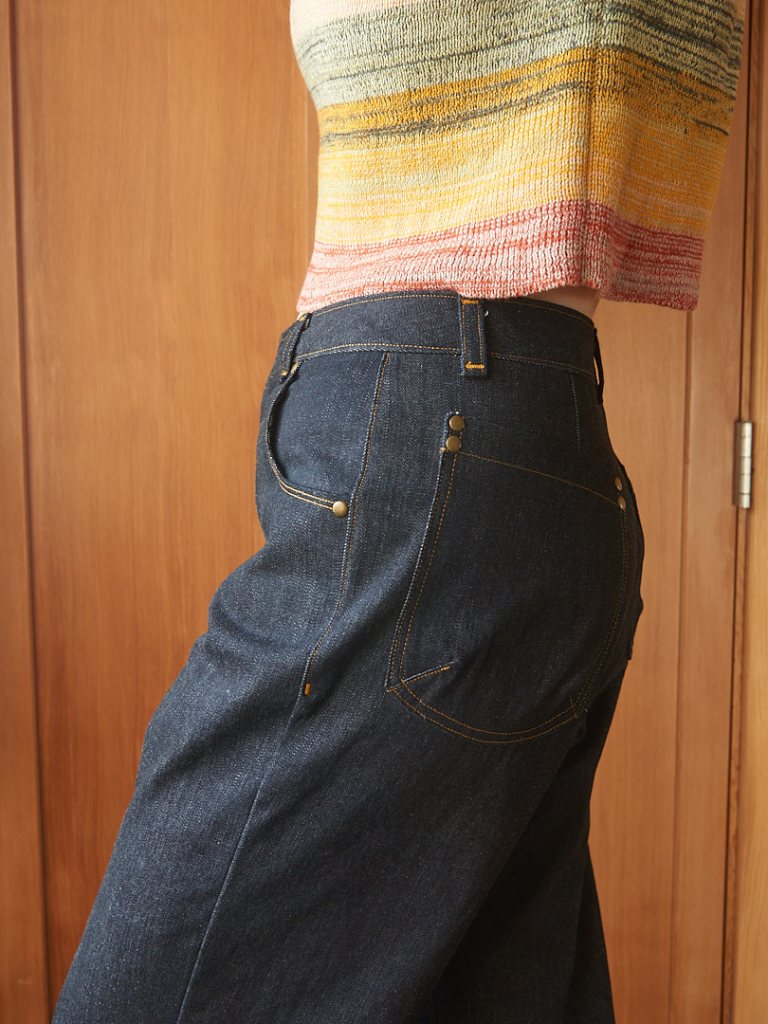
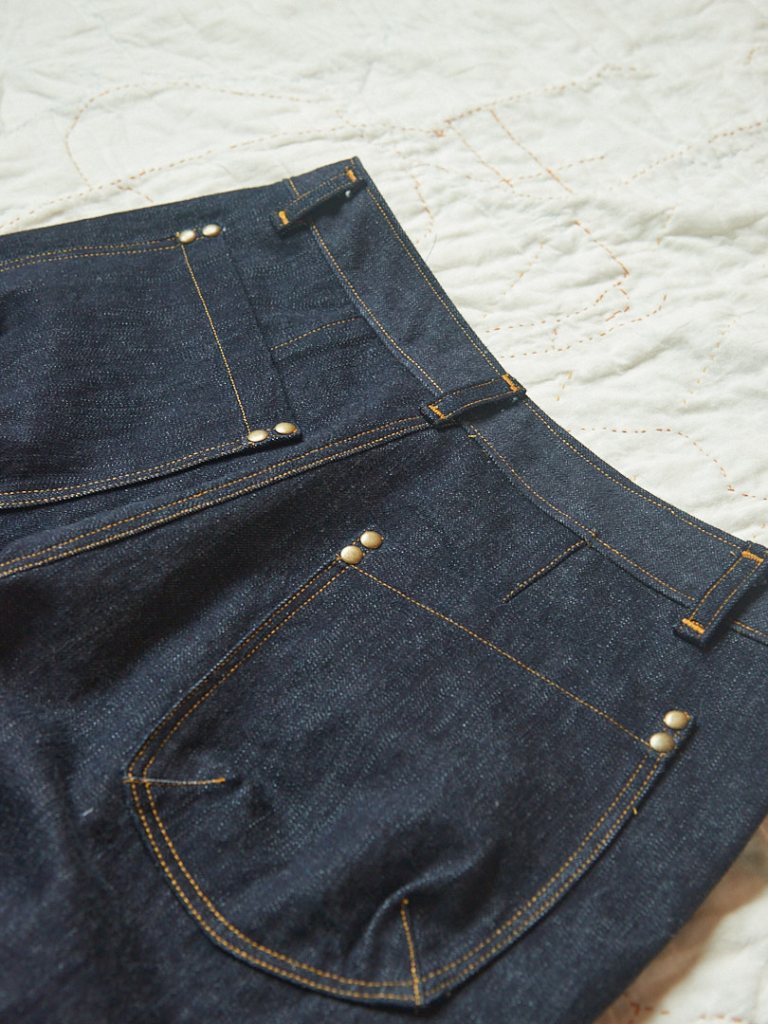
Instead, I decided to use rivets in a tribute to all the “Rosies” of the ’40’s. I played around with different design ideas, including bedazzling the waistband in rivets (which looked objectively awesome, but evoked a 90’s steampunk/goth vibe that didn’t feel like me). Ultimately I settled on installing rivets on the front pockets and then using a double rivet for the back pockets.

I love the look of the double rivets, and they remind me simultaneously of industrial rivets used to fasten metal panels together, but also of the delicate fabric-covered buttons found on women’s blouses in the 1940’s. They also highlight the cool pocket design, which is one of my favorite elements of this pattern. So, win, win.
Adjustments:
I’ve posted detailed fitting notes previously, so I didn’t change much for this second version. My original size 14 Adams pants sit about 1 inch below my natural waist, which is the design intent. I wanted a slightly more mid-rise fit, so I took an additional inch out of the rise using Top Down Center Out, of course.
Since the Adams are designed with an elongated front pocket, I did not move the pocket opening down as I lowered the rise. I can still get my hands in the front pockets with no trouble, even with the rivets installed.
Construction Notes
- For top stitching, I used regular Mara 100 thread held double in my needle instead of topstitching thread. I think this gives a slightly bolder topstitching look, which I prefer.
- For button holes, I use the manual buttonhole function on my Bernina (which is completely hidden in the settings and nowhere in the instruction book, btw), and sewed two passes for a nice think satin stitch. On the second pass, I trace my steps *exactly*, so I always practice first.
- For rivets, I used my snap press from Kamsnaps. You can install rivets using a mallet and a setting tool, but for my arthritic hands the snap press is a game changer. I have separate dies for punching a 2.5mm hole for each rivet post, and then for clamping the rivet into place.


This is likely not the last time I will make this pattern, and I think it’s one of those designs that works well on its own or as a blank canvas for each maker’s creative inspiration, both in terms of fit and styling but also construction details and silhouette.
I’m also not finished with my research on denim history and jeans fashion, either. The more I learn, the more I understand that the origin of denim and jeans is a vastly complex and interesting story, much like American identity. I will look for ways to share more of it with you in the future.


 The Crooked Hem
Leave a reply to Lorelle D’Arcy Cancel reply